
Coalition for the Advancement & Application of Psychological Science
We know it’s a bit of a mouthful, but the bottom line is that CAAPS brings together leading scientists to promote mental health
Still TLDR? We connect you with the psychological science to improve your mental health
About CAAPS
CAAPS was founded in 2016 to bring together organizations that share a common goal: using science to improve mental health care. Our member groups focus on different parts of that mission — from conducting research and training new scientists to sharing proven approaches that help people and communities thrive.
We work together to strengthen the connection between research and real-world care. By fostering collaboration and open dialogue across the field, CAAPS helps identify and remove barriers that keep evidence-based practices from reaching the people who need them most.
CAAPS’ Mission
CAAPS unites leading organizations in psychological science to make evidence-based knowledge accessible, applicable, and impactful. We work together to ensure that mental health care, policy, and public understanding are guided by research and serve the well-being of all people.
Guiding Principles
The public comes first.
We put the well-being of people and communities above personal, professional, or organizational interests.
We act with integrity and transparency.
As a public trust, CAAPS is committed to being open, ethical, and accountable in everything we do.
We rely on science to guide our work.
We believe that using scientific methods to understand behavior is the best way to build knowledge and improve lives.
We are committed to equity and anti-racism.
We actively work to challenge bias and create a more just, inclusive field of psychological science.
CAAPS Executive Board
-

Shannon Sauer-Zavala
PhD Past-Chair
-

Chris Hughes
PhD Chair
-

Lisa Anderson
PhD Secretary/Tresurer
-

Ali Giusto
PhD Member-at-Large
-

Tom Olino
PhD Member-at-Large
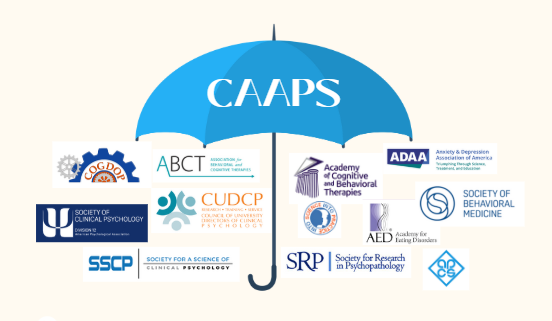
CAAPS Member Organizations
CAAPS brings together the premiere professional organizations with the shared mission of promoting psychological science to improve lives
The Academy of Cognitive and Behavior Therapy (ACBT)is a professional organization dedicated to promoting excellence in cognitive and behavioral therapies. It provides certification for qualified clinicians, supports ongoing education, and upholds high standards of practice in cognitive and behavioral therapy. Members typically include psychologists, psychiatrists, social workers, and other mental health professionals who specialize in evidence-based therapeutic approaches.
The Academy for Eating Disorders (AED) is an international professional organization focused on advancing research, prevention, treatment, and understanding of eating disorders. AED brings together clinicians, researchers, and other experts to promote collaboration, education, and evidence-based practices in the field of eating disorders.
The Academy of Psychological Clinical Science (APCS)is an alliance of leading doctoral and internship programs in clinical psychology committed to promoting science-centered education and training. APCS emphasizes rigorous research, evidence-based practice, and the advancement of clinical science to improve mental health care.
The American Psychological Association (APA) Clinical Practice Guidelines are evidence-based recommendations developed to guide psychologists and other health professionals in delivering effective mental health care. These guidelines synthesize current research and expert consensus to inform assessment, treatment, and ethical practice for various psychological conditions, supporting high standards and consistency in clinical practice.
The Anxiety and Depression Association of America (ADAA) is a professional organization dedicated to the prevention, treatment, and cure of anxiety, depression, and related disorders. ADAA promotes research, provides education and resources for clinicians and the public, and fosters collaboration to improve the understanding and management of anxiety and depression.
The Association for Behavioral and Cognitive Therapies (ABCT) is a professional organization focused on advancing scientific approaches to understanding and treating behavioral and cognitive disorders. ABCT supports research, training, and dissemination of evidence-based therapies, and provides resources and education for clinicians, researchers, and students in the field of behavioral and cognitive therapies.
The Council of Graduate Departments of Psychology (COGDOP) is an organization representing graduate psychology departments in North America. COGDOP facilitates communication, collaboration, and advocacy among department chairs and directors, addressing issues related to graduate education, training, and policy in psychology.
The Council of University Directors of Clinical Psychology (CUDCP) is an organization composed of directors of university-based clinical psychology doctoral programs. CUDCP promotes high standards in clinical psychology education and training, facilitates collaboration among programs, and advocates for policies that advance the field and ensure quality preparation of future clinical psychologists.
The Society for Behavioral Medicine (SBM) is a multidisciplinary organization that promotes research and practice in behavioral medicine. SBM brings together clinicians, researchers, and educators to advance understanding of how behavior impacts health and illness, supports evidence-based interventions, and fosters collaboration to improve public health outcomes.
The Society of Clinical Child and Adolescent Psychology (APA Division 53) is a division of the American Psychological Association dedicated to advancing the science and practice of clinical psychology for children and adolescents. It promotes research, education, and evidence-based assessment and treatment of youth mental health issues, supporting clinicians, researchers, and students in the field.
Society for a Science of Clinical Psychology (SSCP; Section III of Society of Clinical Psychology) is a division of the American Psychological Association focused on promoting the science and practice of clinical psychology. It supports research, education, and the dissemination of evidence-based psychological assessment and treatment, serving clinicians, researchers, and students dedicated to improving mental health care for diverse populations.
The Society for Research in Psychopathology (SRP) is a professional organization dedicated to advancing scientific research on the causes, development, and treatment of psychopathology. SRP brings together researchers to promote collaboration, share findings, and support rigorous investigation into mental disorders and related psychological phenomena.
The Psychological Clinical Science Accreditation System (PCSAS) is an accreditation body that evaluates and accredits doctoral programs in clinical psychology based on their commitment to clinical science. PCSAS emphasizes rigorous scientific training, evidence-based practice, and research excellence to ensure graduates are prepared to advance clinical psychology through science-driven approaches.
The Association of Psychology Postdoctoral and Internship Centers (APPIC) is an organization that coordinates and oversees the application and matching process for psychology internship and postdoctoral training programs. APPIC establishes standards, provides resources, and supports best practices to ensure high-quality training and professional development for psychology trainees.
Initiatives
Although our primary mission is to promote the application of psychological science by educating the public and providing the media with trusted sources, we also recognize that advancing our science also occurs within our field. Here are some of our ongoing and past initatives:
Publications & Statements
When issues or policies that impact mental health arise, it is our responsibility (as the leading psychological science organization) to weigh in.
Training Resource Bank for Therapists
One of the best ways to help evidence-based treatment get into the hands of the people who need it most is to train therapists to the interventions we know work.
Clinical Science Knowledge Exchange
Training future psychological researchers and clinicians is paramount for advancing the impact psychological science can make.
Patient Bill of Rights
When people receiving psychological treatment know what evidence-based care looks like, they can make informed decisions when choosing a provider.